Moss Lawns

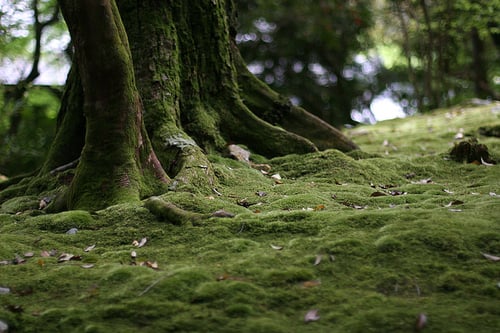
If moss is a problem in your lawn, consider giving up on grass and turning it into a moss garden instead. Moss thrives in shady, moist areas with soil that is acidic (a pH between 5.0 and 6.0 is ideal) and poor quality. Although it might be possible to renovate the area to make it appropriate for turf grass, it would be far easier and more cost-effective to turn it into a moss garden.
Moss gardens have been popular in Japan for centuries, where they are believed to promote a contemplative state of mind. Moss gardens are growing in popularity in the United States as well, especially in the forested regions of the Northeast, Southeast, and Pacific Northwest.
Moss has many advantages over lawn grass in conditions where it would grow naturally. Moss never needs mowing or fertilizing (lacking roots, moss takes its nutrients from air and water). It grows quickly and densely, reducing erosion and outcompeting weeds. Despite their moisture-loving nature, most mosses are relatively drought tolerant and require far less watering than the typical suburban lawn to stay lush and green.
Moss gardens typically have a restful appearance that appeals to many people. The primary disadvantage of moss is that it does not stand up well under heavy traffic, like sports. Light and moderate traffic is fine, however.
Recommended Species
These are some of the best moss species for large-scale moss gardens:
- Fern Moss
- Haircap Moss
- Rock Cap Moss
- Cushion Moss
For sunnier spots, try Bryum and Grimmia mosses.
Planting and Maintenance
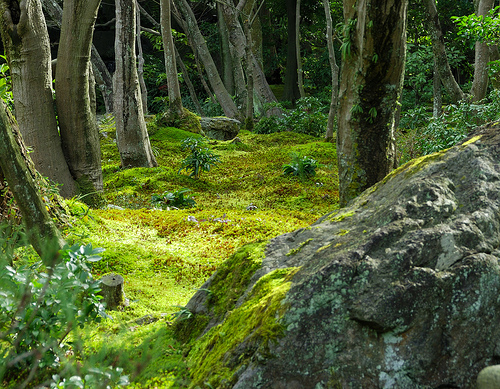
If you already have moss on your property, it is relatively easy to encourage it. Kill the grass in the areas where to want moss to expand and test the soil to ensure that the pH is around 5.5. If necessary, amend it to reach the proper acidity. A bare, compacted surface area is best for encouraging moss.
If transplanting moss "sod" from your own yard or a nursery, prepare the bed in the same way and soak it thoroughly before planting. Press the moss firmly onto the soil and water thoroughly again. If possible, transplant on a cool or cloudy day. Water frequently after planting. Once established, moss needs little watering.
You can also start a moss garden by making a moss "milkshake." Mix a couple handfuls of moss in a blender with a cup or two each of water and stale beer or buttermilk and spread the mixture on the area where you want the moss to grow. Mist the area daily until you see moss starting to grow, which should take about two weeks.
The primary maintenance necessary for established moss gardens is removing leaves in fall. A few are fine, but thick layers can smother the moss if left too long. Unfortunately, rakes can damage the moss. One option is to set a layer of netting over the moss in autumn and collect the fallen leaves to compost or dispose of. Others use leaf blowers.